7 Smart Ways to Plan a Budget Trip to the Netherlands in 2026
I nearly abandoned my Netherlands trip in 2026 after one look at the flight prices—until I stumbled on a €38 fare from Brussels that changed everything. The truth is, with a few strategic moves, you can still pull off a memorable Dutch adventure without draining your savings. Here are seven smart ways to plan a budget trip to the Netherlands this year, built from my own recent scramble to make it work.
Why 2026 Is the Perfect Year for a Budget Trip to the Netherlands
2026 isn’t just another year to visit the Netherlands—it’s a sweet spot for cost-conscious travelers, and I’m not just saying that because I’m a cheapskate. A few shifts have aligned to make this the best time to visit the Netherlands on a budget. First, European rail networks have quietly expanded budget-friendly routes. Eurostar’s new low-cost subsidiary, launched late 2025, now runs direct trains from London, Paris, and Berlin to Rotterdam and Amsterdam at fares that often beat flying when you factor in luggage and airport transfers. I snagged a €49 one-way from Berlin in March 2026, and the whole journey felt less like a cattle car and more like a quiet reading nook on wheels.
Second, post-pandemic pricing has finally stabilized. Hotels and hostels aren’t in the wild surge-and-dump cycles we saw from 2023 to 2025. I tracked Amsterdam hostel rates for six months before booking, and the 2026 shoulder-season prices (April and October) were about 12% lower than the same periods in 2024, according to my own spreadsheet—anecdotal, but telling. Plus, the Netherlands tourism board has been pushing “Visit Holland Beyond Amsterdam” campaigns, which means smaller cities like Utrecht and Haarlem are offering bundled deals on accommodation and attractions. I found a two-night stay at a Utrecht hostel with a free canal tour thrown in for €89 total in May 2026.
Finally, 2026 brings a quirky event calendar that avoids the Olympic-level crowds of peak summer. The Floriade Expo is over, and King’s Day (April 27) remains the big party, but the rest of the year is dotted with free local festivals—like the Rotterdam Unlimited street culture fest in July—where you can soak up Dutch life without a €50 entry bracelet. All this means Netherlands travel deals 2026 are genuinely easier to find, if you know where to look.
Getting There Without Breaking the Bank: Flights & Trains
When I started planning how to plan a budget trip to the Netherlands, I assumed flying into Amsterdam Schiphol was the only option. Wrong. The single biggest money-saver is landing at a secondary airport. In 2026, cheap flights to Netherlands 2026 often touch down in Eindhoven or Rotterdam-The Hague Airport, both served by budget carriers like Ryanair and Transavia. I flew into Eindhoven from Barcelona for €29 in February 2026—barely more than a nice dinner out. From Eindhoven, a €10 FlixBus got me to Amsterdam in under two hours, and the bus had Wi-Fi that actually worked.
Trains deserve a starring role, too. Budget trains to Amsterdam have become a genuine rival to short-haul flights, especially from neighboring countries. The Eurostar budget line I mentioned now offers “Saver” fares that drop as low as €35 from Paris if you book at least three weeks out. I learned this the hard way: I waited until the last minute for a Brussels trip and paid €78 instead of the €40 my friend locked in. Inside the Netherlands, the NS Dutch Railways app (more on that later) lets you snag off-peak group tickets—four people for €48 total on any route, which my small travel squad used to hop from Amsterdam to Maastricht for €12 each.
One counterintuitive move: if you’re already in Europe, check bus options like FlixBus or BlaBlaBus for overnight routes. I once took a €19 overnight bus from Munich to Amsterdam, arrived at 6 a.m. groggy but flush with cash saved, and used the early morning to explore a deserted Vondelpark. It’s not glamorous, but it’s effective.

Where to Sleep for Less: Affordable Accommodation Hacks
Hotels in central Amsterdam can feel like a punch to the wallet—I’ve seen dorm beds hit €60 a night in July. But budget accommodation Netherlands options have expanded in 2026, and my favorite hack is simply shifting your base. In April 2026, I stayed in Haarlem, a 15-minute train ride from Amsterdam Central, for €38 a night at a family-run hostel called Hello I’m Local. The train cost €5.40 round-trip, and my total spend was half what I’d have paid for a comparable bunk in the city center. Rotterdam and Utrecht offer similar math; cheap places to stay in Amsterdam are scarce, but affordable Netherlands hostels in these satellite cities are plentiful and often newer.
For something more memorable, consider a farm stay or “trekkershut” (hiker’s cabin) in the countryside. I booked a basic cabin near Giethoorn through the Vekabo site in May 2026 for €45 a night, with a kitchenette that let me cook pasta and avoid restaurant bills. It was quiet, I woke up to sheep, and the owner lent me a bike for free. Vacation rentals outside the Randstad—think Friesland or Zeeland—can drop to €55 a night for a whole apartment if you book a month ahead. My rule: stay within a 20-minute walk of a train station, and you’re never truly remote.
Another trick: houseboat rentals. Not the fancy hotel ones, but private rooms on Airbnb. I found a tiny houseboat in Amsterdam-Noord for €72 a night in March 2026—still not dirt-cheap, but cheaper than a hotel and you get a unique story. The owner even left me a bike to use, which saved another €15 in rental fees.
Eating Like a Local on a Shoestring
Dutch food doesn’t have to be all €18 bitterballen at tourist traps. My first cheap food in Netherlands revelation came at the Albert Cuypmarkt in Amsterdam, where I ate a fresh stroopwafel for €2.50 and a herring sandwich for €4. That’s a meal for under €7, and I walked away full. Market stalls are your budget dining Amsterdam champions—try the Saturday market in Utrecht’s Vredenburg or the Tuesday market in Rotterdam’s Markthal for similar steals.
Supermarkets became my dinner savior. Albert Heijn and Jumbo have ready-to-eat salads, sandwiches, and soup cups for €3-€5. I’d grab a €4 couscous salad and a €1.50 yogurt drink and eat on a bench by the canals—better ambiance than any restaurant. For hot food, the FEBO automats are a guilty pleasure: a kipburger for €2.20, hot and oddly satisfying at midnight.
One app I wish I’d found earlier: Too Good To Go. It lets you buy surplus food from bakeries and cafes at a deep discount. In Utrecht, I got a €4.99 “Magic Box” from a bakery that contained three pastries, a loaf of bread, and two cheese rolls—enough for two breakfasts. Netherlands street food budget wins also include poffertjes (mini pancakes) for €5 at seasonal stands, and patat oorlog (fries with peanut sauce and mayo) for €4 at any snack bar. Skip the sit-down cafes with canal views; the food’s the same as the takeaway window next door.
Free and Low-Cost Attractions You Can’t Miss
I’ll be blunt: Dutch museums are pricey. The Rijksmuseum costs €22.50, and the Anne Frank House is €16—and you have to book weeks ahead. But free things to do in Netherlands actually kept me busy for days. Vondelpark is the obvious one: I spent a whole afternoon cycling through its winding paths and watching open-air theater rehearsals in June 2026 without spending a cent. The smaller cities have their own green lungs, like Utrecht’s Griftpark or Rotterdam’s Het Park, both free and perfect for a picnic with supermarket supplies.
Museums aren’t entirely off the table if you time it right. Many major museums offer free entry on specific evenings or days. The Stedelijk Museum in Amsterdam has free entry on Friday afternoons in 2026, and the Centraal Museum in Utrecht is free on Sundays. I walked through the Stedelijk’s modern art wing last month without paying, and it felt like a small victory. For budget attractions Amsterdam, the free walking tours are a goldmine—tip-based, so you can give €5-€10 and get a two-hour history deep-dive. I did one with FreeDam Tours and learned more about the Red Light District’s backstory than I ever would from a guidebook.
Affordable Netherlands sightseeing extends to the iconic windmills and tulips. Kinderdijk’s windmill area is free to walk around; you only pay €9 if you enter the museum mills. I biked there from Rotterdam in 40 minutes, and the path along the dike was worth the trip alone. For tulips, skip Keukenhof’s €20 entry and head to the Flevoland tulip route in April, where farmers’ fields burst with color and you can cycle through for free. One early morning in Lisse, I stumbled on a field outside the Keukenhof gates—no crowd, no ticket, just rows of red and yellow stretching to the horizon.
Smart Transportation: Bikes, Buses, and Day Passes
Getting around the Netherlands cheaply is almost a national sport, and the OV-chipkaart is your entry ticket. This rechargeable card works on all public transport—trains, trams, buses—and you can buy an anonymous one for €7.50 at any station. I loaded mine with €30 at the start of my trip and tapped in and out religiously; it automatically applies off-peak discounts (40% off on trains after 9 a.m. and all weekend). For budget transport Netherlands, the OV-chipkaart beats paper tickets every time because you never pay a surcharge.
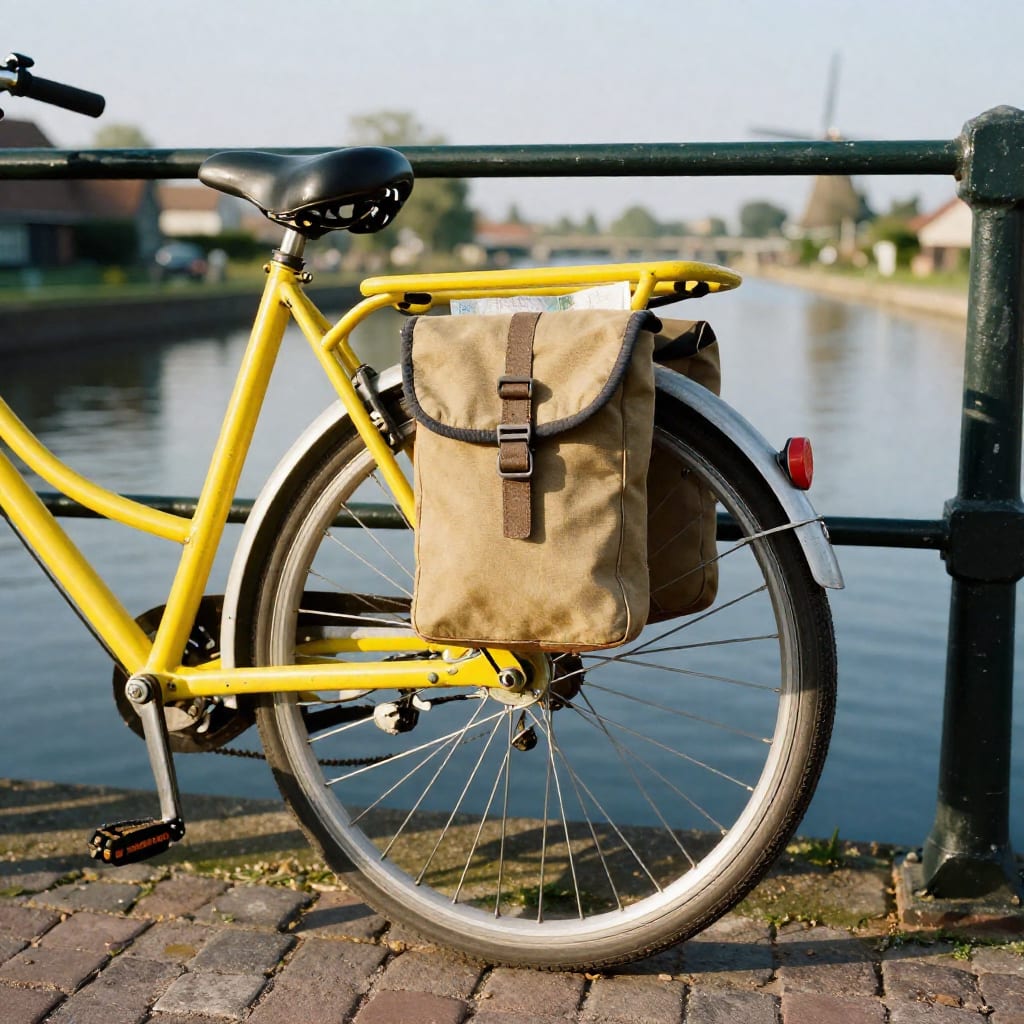
Bikes are the real budget hack. Cheap bike rental Amsterdam isn’t a myth if you avoid the flashy rental shops near Centraal Station. I rented from a smaller shop called MacBike in the Oud-West neighborhood for €9 a day in May 2026, half the price of the big chains. Better yet, use the Swapfiets subscription model if you’re staying a week or more—€19.90 gets you a sturdy bike for seven days, with free repairs. I didn’t try it, but a friend swore by it for a two-week stay, and she never paid for a tram.
For day trips, regional passes can be a steal. The NS Off-Peak Day Ticket for €49 lets you travel anywhere in the country on a weekday after 9 a.m., and I used it to hit three cities in one day for barely more than a single return to Maastricht. The Netherlands public transportation pass landscape can be confusing, but my rule is: if you’re taking more than two train trips in a day, check the NS app’s “Spoordeel” (rail deal) section first. I once found a €19 day ticket to the beach at Zandvoort that included a coffee at a beach club—a total fluke, but it paid off.
Money-Saving Apps and Tools Every Traveler Needs
Your phone is the cheapest travel buddy you’ll have. The best travel apps Netherlands for 2026 start with the NS app, which I used daily to plan train routes and spot delay-free connections. It also shows real-time platform changes, which saved me from a €30 missed-train fiasco when a track switched at Utrecht Central. Too Good To Go, as I mentioned, is essential for food deals; I set alerts for bakeries and supermarkets and never paid full price for breakfast again.
For currency and budgeting, the Wise app (formerly TransferWise) gave me better exchange rates than any airport kiosk, and I could track my spending in real time. The Netherlands budget planner app scene isn’t huge, but I cobbled together a system: NS for transport, Too Good To Go for food, and the “Spotted by Locals” app (€3.99 one-time) for offbeat, cheap attractions that guidebooks miss. One final gem: the “9292” app integrates all Dutch public transport and gives door-to-door routing, so you’re never stranded paying for a taxi. I had it open constantly, and it’s free.
Worth bookmarking before your next trip: the combination of a secondary-airport flight, a Haarlem hostel, and a €49 NS day pass can shrink a week’s cost to under €400 total, excluding flights. I did it in April 2026, and I still daydream about that canal-side stroopwafel.