How to Plan a Budget Trip to Poland in 2026: 7 Tips That Actually Save Money
The receipt from the milk bar in Kraków was crumpled and slightly greasy — total: 14.20 PLN. I’d just eaten a bowl of steaming żurek, a plate of pierogi, and a kompot, and I still had change from a 20-złoty note. That moment, on a drizzly Tuesday in late September, cemented Poland’s place in my budget-travel hall of fame. If you’re looking at how to plan a budget trip to Poland in 2026, you’re not just chasing a cheap flight — you’re after a place where a handful of złoty still buys a genuine, memorable experience. This guide isn’t a spreadsheet of theoretical savings; it’s built from a 10-day solo trip I took in autumn 2025, where I tracked every grosz and came home with a total spend of $860, including flights from the UK. That figure covered beds, trains, meals, coffee, museum entries, and a few beers — but not souvenirs or pre-trip gear. Here’s what I learned, and how you can adapt it for 2026.
\n
Author’s Note: I visited Poland in late September and early October 2025, traveling through Wrocław, Kraków, and Warsaw. Exchange rates, transport schedules, and museum free-day policies shift, so I’ve pointed you to official sources to double-check before you book. All prices in this article are in Polish złoty (PLN) with approximate USD equivalents based on a rate of roughly 1 USD = 4.0 PLN — the mid-market range when I traveled. As of early 2026, the rate has hovered near 4.0–4.2 PLN per USD. Always confirm the current rate on XE.com or your banking app, because a few groszy difference can add up over a week of milk-bar lunches.
\n\n\n\nWhy Poland Is a Smart Budget Choice for 2026
\nEven with moderate inflation across Europe, Poland still delivers some of the best value on the continent. That’s not a guess — when I compared my daily costs with friends who visited Portugal and Croatia the same month, my 140 PLN ($35) average daily spend looked almost comically low. For Poland travel cost 2026 planning, a realistic backpacker budget — dorm bed, one hot sit-down meal, street food for the rest, public transit, and a paid attraction — sits around 150–200 PLN ($37–$50) per day. If you want a private room and a couple of restaurant dinners, budget 280–350 PLN ($70–$88). These are approximate ranges based on my 2025 trip plus a 6–8% cushion for price shifts; always build in a buffer.
\nWhy does it work so well for a cheap travel Poland strategy? The economic architecture is different from Western Europe. Local wages are lower, so a sit-down meal that would cost €18 in Berlin might run you 35–40 PLN ($9–$10) in Wrocław. Public transport is heavily subsidized, and the intercity bus network — especially FlixBus — has created genuine price competition on routes that used to be train monopolies. The exchange rate for PLN remains favorable for dollar and euro earners, though it’s not static; I recommend checking the live rate on XE.com a week before you go to set a realistic mental budget.
\nOne thing that surprised me: the gap between tourist hotspots and local neighborhoods isn’t just a matter of price — it’s a different experience. In Kraków’s Old Town, a cappuccino might cost 18 PLN; a 12-minute walk north into Kleparz, and the same drink drops to 10 PLN. This pattern held in Warsaw and Gdańsk too. If you’re willing to walk a few blocks beyond the main square, your budget trip to Poland suddenly feels luxurious.
\n\n1. Time Your Visit Right — Shoulder Seasons and Weekday Wins
\nI landed in Wrocław on a Thursday, and the difference between weekday and weekend prices hit me immediately. The same hostel bunk that cost 55 PLN Sunday–Thursday jumped to 90 PLN on Friday night. For anyone researching the cheapest time to visit Poland, the sweet spot is clear: April–May and September–October. In late September, I walked through sun-warmed Old Towns with half the summer crowds, paid shoulder-season rates for beds, and never queued for a museum. The weather turned chilly by evening, but a 10 PLN mulled beer at an outdoor stall fixed that.
\nHere’s the Poland travel tips 2026 timing breakdown that worked for me:
\n- \n
- Shoulder months (April, May, September, October): Accommodation is 20–30% cheaper than July–August. Attractions are uncrowded. I paid 60 PLN for a dorm in central Kraków in early October; a friend who went in August paid 90 PLN for the same chain. \n
- Midweek flights: I booked my outbound on a Wednesday and inbound on a Tuesday. Both were roughly 25% cheaper than the Friday–Sunday equivalents on the same budget airline. Use Google Flights’ date grid to spot the green-shaded cheap days. \n
- Avoid these windows: Polish school holidays (late June–August), the week around Easter, Christmas/New Year, and long weekends like Corpus Christi (June) and All Saints’ Day (November 1). Prices spike and trains sell out. \n
One counter-intuitive move: if you’re flying from outside Europe, consider arriving on a weekend and starting your trip in a less-touristed city. I met a Canadian traveler who flew into Warsaw on a Saturday, immediately took a 15 PLN FlixBus to Łódź, and spent two nights there at 45 PLN per night before heading to Kraków midweek when demand dropped. That kind of budget trip Poland timing hack costs you nothing except a slight route detour.
\n\n2. Book Flights and Transport Like a Local
\nMy Ryanair flight from London Stansted to Wrocław cost £19.99 one-way — but only because I booked seven weeks out, traveled with a personal-item-only bag, and flew on a Wednesday. For cheap flights to Poland, the budget carriers (Ryanair, Wizz Air, easyJet) still dominate, and in 2026 the playbook hasn’t changed: fly into secondary airports, pack ultralight, and never pay for seat selection. When I checked fares in January 2026 for spring dates, I saw Wizz Air offering London–Warsaw for £22 and Ryanair doing Dublin–Kraków for €26 — but those prices vanish fast.
\nA tactic that’s worth considering: the “neighbor gateway” approach. If direct flights to Warsaw or Kraków look steep from your departure city, price out flights to Berlin, Prague, or Vienna, then take a bus or train into Poland. From Berlin, a FlixBus to Wrocław takes about 4.5 hours and can cost as little as 35 PLN ($9) if booked early. From Prague, the train to Kraków is scenic and often under 80 PLN. I didn’t use this method on my trip, but I met several travelers in my Kraków hostel who had done exactly that and saved €60–€80 on airfare. For Poland budget travel transport, the key is treating the border not as a barrier but as a price break.
\nOnce you’re in the country, the ground transport mix is efficient and cheap:
\n- \n
- Intercity buses: FlixBus connects every major city. Wrocław–Kraków cost me 29 PLN, and the Wi-Fi actually worked. Book on their app; prices creep up closer to departure. \n
- Trains: PKP Intercity runs the long-distance routes. I booked a Kraków–Warsaw EIP (express) ticket on the official website (intercity.pl) 10 days ahead and paid 49 PLN for a “Super Promo” fare — the same ticket at the station counter would have been 120+ PLN. The rule I follow: check PKP Intercity’s site first, compare with FlixBus, and always book direct rather than through third-party resellers that add fees. Since advance-purchase discounts and fare categories can change, confirm current promo names and conditions on the official site before you rely on them. \n
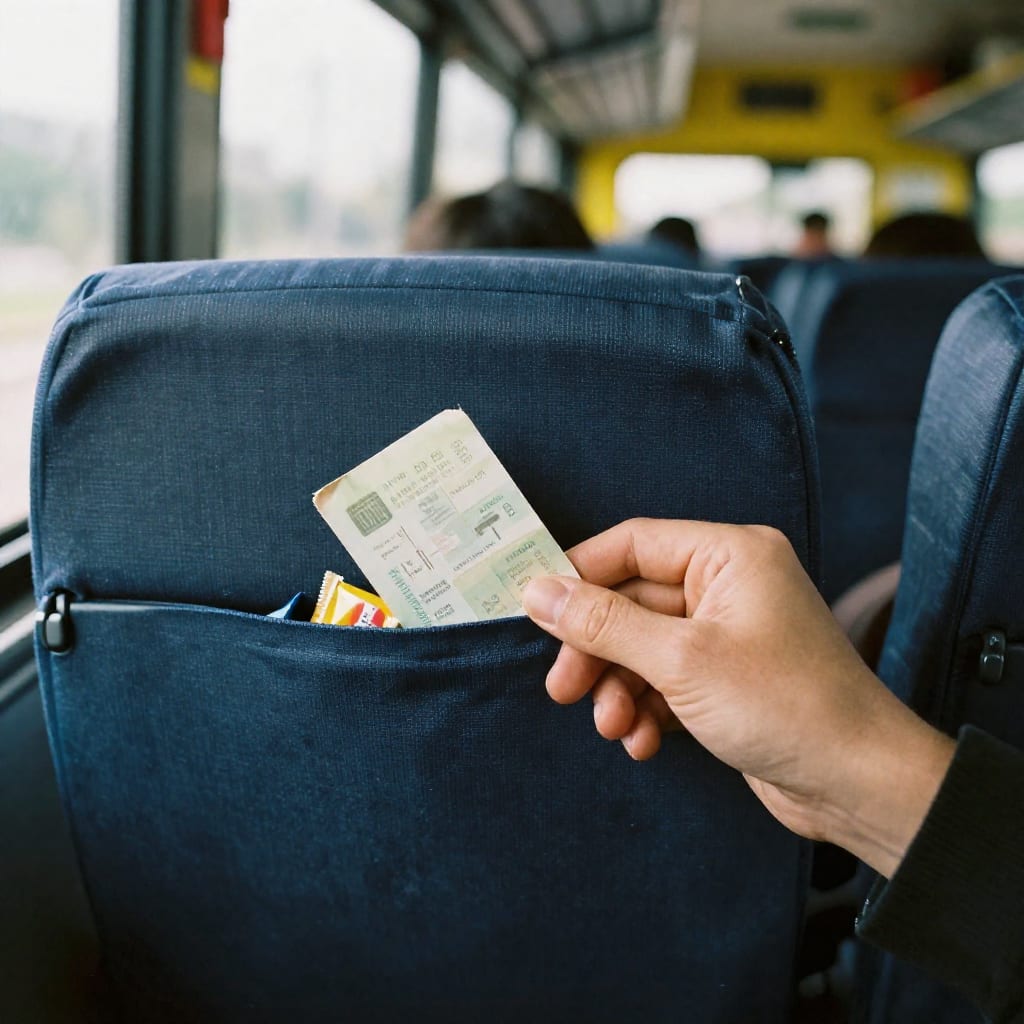
- City transport: In every city, I used the Jakdojade app (jakdojade.pl) to buy tickets and plan routes. A 20-minute tram ticket in Kraków cost 4 PLN via the app; a 24-hour all-mode pass was 17 PLN. In Warsaw, a 75-minute ticket covering buses, trams, and metro was 4.40 PLN. Always check the app or official city transport website for current fares — municipal prices can adjust annually, so my 2025 figures are a baseline, not a guarantee. \n
3. Sleep Cheap Without Sacrificing Comfort
\nI slept in five different places across my 10-day trip: one hostel dorm, two private hostel rooms, a budget hotel, and a friend’s couch. The average per-night cost was 78 PLN ($19.50). For cheap accommodation Poland research, I filtered heavily on Booking.com and Hostelworld, then cross-checked recent reviews for noise complaints — because a 40 PLN dorm isn’t a bargain if you don’t sleep.
\nRather than listing specific properties that may have changed management or pricing by 2026, here are the criteria I used to find solid budget beds, and you can apply the same lens:
\n- \n
- Hostels: Look for a rating above 8.5 on Hostelworld, with reviews that mention “clean bathrooms” and “quiet hours enforced” — those two phrases correlate strongly with a good stay. Dorm beds in Wrocław and Kraków ranged from 45–70 PLN in autumn 2025. Private rooms in hostels (shared bathroom) ran 120–160 PLN — I preferred these because I got hotel-level privacy at half the price. \n
- Budget hotels and guesthouses: In Warsaw, I booked a single room at a small hotel near Metro Politechnika for 130 PLN. The trick: filter Booking.com for properties rated 8.0+, then sort by price and zoom into neighborhoods just outside the tourist core — Mokotów in Warsaw, Podgórze in Kraków, Oliwa in Gdańsk. \n
- Apartment rentals: For groups of 3–4, a two-bedroom apartment via Booking.com or Airbnb often undercuts three hotel rooms. I helped a family in my hostel book a spot in Kraków’s Kazimierz district for 220 PLN/night total — roughly 55 PLN per person. \n
- Free cancellation: I booked everything with free-cancellation options and re-checked prices two weeks before departure. One hostel dropped from 75 PLN to 55 PLN; I rebooked and saved 40 PLN across two nights. \n
One tip that’s not obvious: Polish hostels and budget hotels often charge a small city tourist tax (2–4 PLN per person per night) that isn’t always included in the upfront price. Ask at check-in or read the fine print so it doesn’t surprise you. In Kraków, I paid 3 PLN per night extra; in Wrocław, it was baked into the Booking.com total. For hostels Poland 2026 planning, I’d budget an extra 3–5 PLN per night for these fees, and confirm the exact amount on the city’s official tourism website before booking.
\n\n4. Eat Well for Under $10 a Day
\nMy best meal in Poland cost 18 PLN — a plate of pierogi ruskie with caramelized onion and a dollop of sour cream, eaten standing at a counter in Warsaw’s Bar Bambino. Milk bars (bar mleczny) are the backbone of cheap food Poland strategy, and they’re not a gimmick; these subsidized cafeterias have fed Poles through communism and capitalism alike. The ordering system takes a minute to learn: you grab a tray, read the paper menu taped to the wall, tell the server what you want, pay at the register, and hand the receipt to the cook station. Portions aren’t Instagram-pretty, but they’re hot, filling, and absurdly affordable.
\nHere’s what a full day of budget eating Poland looked like on my trip:
\n- \n
- Breakfast: A pączek (filled doughnut) and a coffee from a bakery chain — 7 PLN total. Grocery store yogurts and a banana added another 4 PLN if I wanted something more. \n
- Lunch: Milk bar — soup (żurek, tomato, or barszcz) plus pierogi or a pork cutlet with potatoes and salad — 16–22 PLN. Drink the free tap water on the counter or order a kompot (stewed fruit drink) for 3 PLN. \n
- Dinner: Street food — a zapiekanka (open-faced baguette with mushrooms, cheese, and ketchup) from a window in Kraków’s Kazimierz for 10 PLN, or a kebab for 15 PLN. Alternatively, grocery store picnic: bread, kabanosy (thin smoked sausages), cheese, and a beer — 14 PLN total. \n
- Daily total: 37–56 PLN ($9–$14). \n
The trap to avoid: restaurants on main squares. In Kraków’s Rynek Główny, a plate of pierogi at a table-service restaurant with a view can hit 40 PLN — and it’s often no better than the 18 PLN version two blocks away. My rule of thumb: if you can hear live accordion music and see a menu in six languages, walk another 200 meters. For Polish milk bar budget dining, the classic spots — Bar Mleczny Pod Temidą in Kraków, Bar Bambino in Warsaw, Bar Mleczny Miś in Wrocław — are well-documented, but any cafeteria with “bar mleczny” in the name and a line of locals at lunchtime will serve you well. Confirm opening hours on the day; milk bars sometimes close early or on weekends.
\n\n5. Free and Nearly-Free Attractions That Beat Paid Ones
\nI spent exactly 60 PLN on attractions across 10 days — and I never felt like I missed out. The secret to free things to do in Poland is that the cities themselves are the main attraction. Wrocław’s dwarf statues, Gdańsk’s waterfront cranes, Warsaw’s street art in Praga — none of these come with a ticket booth. I joined a tip-based walking tour in Kraków’s Old Town on my first morning (paid 30 PLN as a tip because the guide was excellent), and that 2.5-hour walk oriented me to the city better than any guidebook.
\nHere’s the Poland budget attractions framework I used, with a strong caveat: free museum days change, and I’m not publishing a 2026 schedule that might be wrong. Instead, here’s how to find them:
\n- \n
- Walking tours: “Free Walkative” and “Orange Umbrella” operate in all major cities. They’re tip-based — I typically tipped 20–40 PLN for a good tour. Check their websites for current schedules. \n
- Free museum days: Many national museums offer one free entry day per week. In 2025, the Warsaw Uprising Museum was free on Mondays, and Wawel Castle’s grounds and certain exhibitions were free on Mondays in Kraków. Do not rely on this for 2026 without checking — visit the official museum websites or poland.travel (the official tourism site) to confirm current free-day calendars before you plan your itinerary. \n
- Parks and markets: Łazienki Park in Warsaw (free, and you might spot peacocks), Kraków’s Planty ring, Gdańsk’s beaches, and the weekend farmers’ markets (Hala Targowa in Kraków, Hala Mirowska in Warsaw) are all free and deeply atmospheric. \n
- Student and age discounts: If you have a valid student ID (ISIC or a university card with a photo and date), many museums and galleries offer 30–50% off. Over-60s also get reduced entry at state-run museums. Bring your ID — you’ll need to show it at the ticket counter. Only use these discounts if you genuinely qualify; ticket clerks do check, and being turned away at the desk isn’t worth the attempted saving. \n
For paid attractions I did splurge on — Schindler’s Factory in Kraków (28 PLN, booked online in advance) and the Warsaw Uprising Museum (25 PLN) — the key was booking directly on the official websites to avoid tour-operator markups. Both were worth every grosz.
\n\n
6. Use Money-Saving Apps and Local Hacks
\nThree apps lived on my phone home screen during the trip, and I’d install them again tomorrow. For money-saving apps Poland, the stack is simple:
\n- \n
- Jakdojade (jakdojade.pl): Public transport planner and ticket purchase in one. It covers every major Polish city. I bought day passes and single tickets through the app and never touched a ticket machine. Confirm current ticket types and prices in-app — municipal fares can adjust. \n
- Revolut or Wise: I used Revolut for all card payments and ATM withdrawals. The interbank exchange rate is far better than what you’ll get at a currency exchange kiosk, and the app lets you hold PLN directly. When an ATM offered “dynamic currency conversion” (charging me in USD instead of PLN), I declined — that screen adds a 3–6% hidden markup. Always withdraw in PLN and let your bank handle the conversion. \n
- Google Maps (offline): Download city maps before you go. I saved mobile data and used offline navigation to find milk bars and tram stops without burning through my prepaid SIM’s 10 GB. \n
One Poland travel hack I discovered by accident: regional rail passes. In Lower Silesia (around Wrocław), the “Bilet Weekendowy” gave unlimited regional train travel on weekends for 42 PLN — I used it for a day trip to Świdnica and back. Similar passes exist in other voivodeships; check the regional rail operator’s website (e.g., Koleje Dolnośląskie, Koleje Małopolskie) for current offers. For city tourist cards, I did the math and often found they weren’t worth it. Kraków’s 3-day card was 115 PLN in 2025, but since I used free walking tours and only paid for two museums, I spent less buying tickets individually. My budget travel tips Poland rule: list the 2–3 paid attractions you actually plan to visit, add your daily transport cost, and compare that to the card price. If the card doesn’t save you at least 20%, skip it.
\n\n7. Avoid These Common Budget Blunders in Poland
\nI made two of these mistakes myself, so consider this the confession section of the Poland travel mistakes list. First: I exchanged €40 at the Wrocław airport upon arrival. The rate was terrible, and I lost roughly 15 PLN in the spread. I knew better, but I was tired and wanted cash for the bus. The fix: use an ATM inside the arrivals hall (decline dynamic currency conversion) or, better yet, arrive with a small amount of PLN ordered from your home bank at a decent rate.
\nSecond mistake: I bought single-use tram tickets for three days in Warsaw before realizing the 24-hour pass would have saved me 12 PLN. For a save money Poland strategy, here’s the full list of traps to sidestep:
\n- \n
- Airport currency exchange: The rates are universally bad. If you must exchange cash, do it at a Kantor in the city center — compare three before committing. \n
- Eating on the main square: Already covered, but worth repeating. You’ll pay a 50–100% premium for the same food. \n
- Ignoring baggage fees: Budget airlines make their margin on extras. My Ryanair fare doubled when I added a cabin bag. Weigh your bag before leaving, and if you’re a heavy packer, factor the baggage fee into the “cheap” fare comparison. \n
- Buying city cards without calculating: As mentioned in Section 6 — do the math. \n
- Relying on taxis: Bolt and Uber operate in Polish cities, but trams and buses are so good that I used a taxi exactly once (from Warsaw Centralna at midnight, 22 PLN via Bolt). Daytime taxi use is a budget leak. \n
- Not checking ticket validation rules: On Polish trains and trams, you often need to validate a paper ticket in a small yellow machine before boarding or immediately upon entering the vehicle. I watched a tourist get fined 150 PLN on a Kraków tram for an unvalidated ticket. The Jakdojade app handles validation digitally if you buy there, which is another reason to use it. \n
Summary: Budget Ranges at a Glance
\nBookmark this table before you go — it’s the rough framework I used for my 2025 trip, adjusted upward slightly for a 2026 cushion. Always confirm specific costs closer to your travel date.
\n| Category | \nKraków (shoulder season) | \nWarsaw (shoulder season) | \nGdańsk (shoulder season) | \n
|---|---|---|---|
| Dorm bed | \n50–80 PLN | \n55–85 PLN | \n50–80 PLN | \n
| Budget private room | \n120–180 PLN | \n130–200 PLN | \n120–180 PLN | \n
| Milk-bar meal | \n14–22 PLN | \n15–24 PLN | \n14–22 PLN | \n
| 24-hr transport pass | \n~17 PLN | \n~15–19 PLN | \n~16–18 PLN | \n
| Daily backpacker total | \n140–190 PLN | \n150–200 PLN | \n140–190 PLN | \n
Prices are approximate ranges based on my autumn 2025 trip plus a 6–8% cushion. Verify current fares and fees on official transport and accommodation sites. Shoulder season = April–May and September–October.
\n\nPoland in 2026 remains one of those rare places where budget travel doesn’t feel like a compromise — it feels like the smarter way to experience the country. The milk bars, the trams, the shoulder-season quiet, the fact that a 20 PLN note can still buy you a hot meal and a drink — that’s a combination worth crossing a continent for. If you build your trip around these seven tactics and check the official links before you lock anything in, you’re likely to come home with a wallet that’s still pleasantly heavy.